James Webb Space Telescope 2026 Discoveries | Latest JWST Findings & Images
Explore groundbreaking 2026 discoveries from the James Webb Space Telescope, including early galaxy formations, exoplanet atmospheres, dark matter maps, and cosmic mysteries. In-depth analysis of how JWST is transforming cosmology and our view of the universe.
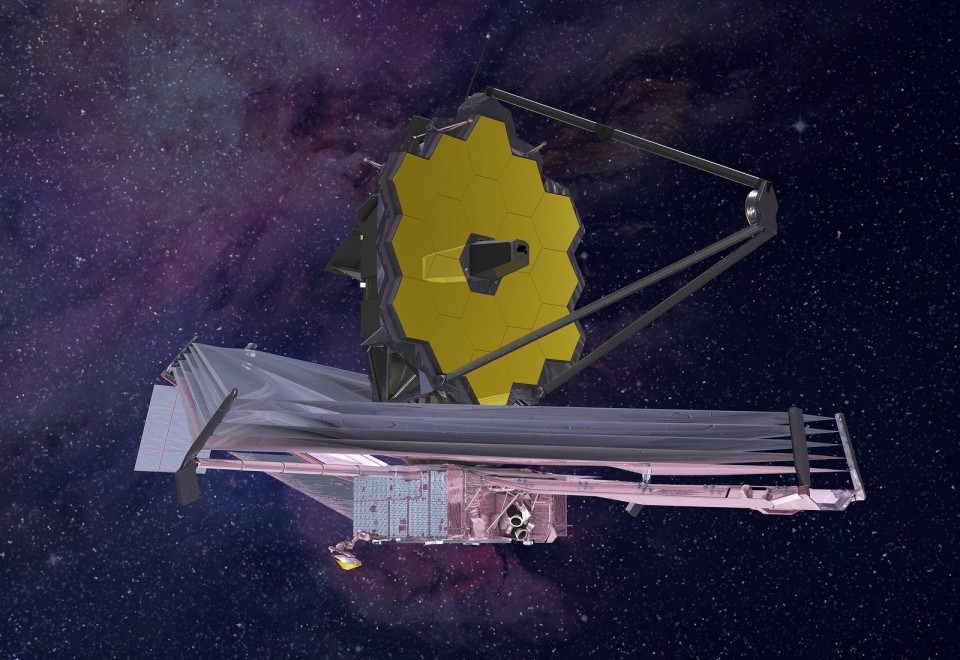
James Webb Space Telescope: Revolutionary Discoveries Reshaping Our Understanding of the Universe in 2026
The James Webb Space Telescope (JWST), a collaborative project by NASA, ESA, and CSA, continues to deliver unprecedented insights into the cosmos. Launched in December 2021 and operating at the Sun-Earth L2 Lagrange point, JWST’s advanced infrared capabilities allow it to peer deeper into space and time than any previous observatory. In 2026, the telescope has produced a series of landmark discoveries that challenge existing cosmological models and open new avenues for scientific exploration.
Overview of the James Webb Space Telescope
JWST features a 6.5-meter primary mirror composed of 18 hexagonal segments, enabling exceptional sensitivity and resolution in the infrared spectrum. Its sunshield, the size of a tennis court, protects the instruments from solar heat, maintaining the extremely low temperatures required for infrared observations. Unlike the Hubble Space Telescope, which primarily observes visible and ultraviolet light, JWST excels at detecting faint, redshifted light from the early universe and penetrating dense cosmic dust clouds.
Designed for a minimum five-year mission with potential for over 20 years of operation, JWST investigates every phase of cosmic history — from the formation of the first stars and galaxies to the atmospheres of potentially habitable exoplanets.
Key Discoveries in 2026: Pushing the Boundaries of the Early Universe
In early 2026, JWST confirmed the existence of galaxy MoM-z14, observed just 280 million years after the Big Bang. This finding pushes the observable universe closer to the cosmic dawn and raises questions about how such massive, structured galaxies formed so rapidly.
Additional highlights include:
- Galaxy Mergers in the Early Universe: Astronomers identified “JWST’s Quintet,” a rare collision involving at least five galaxies approximately 800 million years after the Big Bang. This discovery indicates that complex galactic interactions occurred far earlier than previously anticipated.
- Dusty Star-Forming Galaxies: Observations revealed a population of faint, dusty galaxies at high redshift (up to z ~ 8), serving as a potential missing link between ultrabright early galaxies and later quiescent systems.
- Dark Matter Mapping: JWST produced one of the highest-resolution maps of dark matter distribution to date, covering hundreds of thousands of galaxies. The map illustrates how dark matter scaffolds influence the formation and clustering of visible matter across vast cosmic scales.
Exoplanets and Planetary Formation Breakthroughs
JWST has significantly advanced the study of exoplanets and star formation in 2026:
- Redefining the Planet-Star Boundary: Detailed observations of 29 Cygni b (approximately 15 times Jupiter’s mass) provided evidence that it formed via accretion in a protoplanetary disk, blurring traditional distinctions between massive planets and brown dwarfs.
- Direct Imaging of Young Exoplanets: The telescope captured direct images of TWA 7b, a Saturn-mass planet embedded in a debris disk, offering new insights into planet formation processes around young stars.
- Atmospheric and Disk Studies: Continued analysis of systems such as TRAPPIST-1 and K2-18b has detected potential biosignature gases, while detailed imaging of star-forming regions like W51 reveals hidden newborn stars.
Other Notable Observations and Cosmic Phenomena
JWST has also contributed to:
- High-resolution views of Saturn in collaboration with Hubble.
- Studies of enigmatic objects such as the Cranium Nebula.
- Investigations of long-duration gamma-ray bursts and fast radio bursts that challenge existing models of stellar explosions.
- Detailed examinations of star clusters and supernova remnants, enhancing our knowledge of stellar evolution.
Scientific Impact and Challenges to Current Models
Many 2026 findings challenge conventional cosmological timelines. The rapid formation of massive galaxies and supermassive black holes in the early universe suggests that current models may underestimate the speed and efficiency of structure formation following the Big Bang. These observations have sparked intense debate regarding the roles of dark matter, dark energy, and early black hole seeding.
JWST’s data also supports refined mapping of the cosmic web and provides critical constraints on the reionization epoch, when the first stars and galaxies transformed the neutral hydrogen universe into the transparent cosmos we observe today.
How JWST Achieves These Breakthroughs
The telescope’s success stems from its suite of advanced instruments, including the Near-Infrared Camera (NIRCam), Near-Infrared Spectrograph (NIRSpec), Mid-Infrared Instrument (MIRI), and Fine Guidance Sensor/Near InfraRed Imager and Slitless Spectrograph (FGS/NIRISS). These tools enable multi-wavelength imaging and spectroscopy of faint, distant objects that were previously inaccessible.
Future Prospects for JWST
With Cycle 5 observations commencing in 2026, astronomers anticipate further revelations in time-domain astronomy, exoplanet characterization, and deep-field surveys. The telescope’s extended lifespan positions it as a cornerstone for upcoming missions, including synergies with the Nancy Grace Roman Space Telescope and ground-based observatories.
Conclusion
The James Webb Space Telescope has solidified its role as the premier observatory of the decade. Its 2026 discoveries — spanning early galaxy evolution, dark matter distribution, and planetary systems — continue to rewrite textbooks and inspire new generations of scientists. As data analysis progresses, JWST promises even deeper insights into humanity’s place in the universe and the fundamental laws governing cosmic evolution.
This article is based on publicly reported scientific findings as of mid-2026. Ongoing research may yield additional refinements.
10 Best Antivirus Software on the Market
Software

Star Wars: A Cultural Phenomenon
Movies

Johnny Depp: A legendary actor and producer
People

The idea of being woke
Social

Nicola Tesla
Science

Best AI Health and Fitness Tools 2026 | Personalized Wellness Apps & Devices
AI